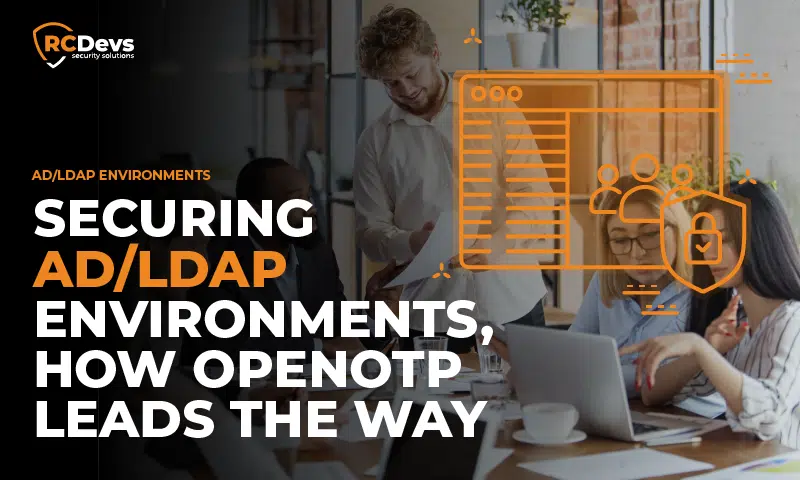
Many European organizations face a distinct challenge: strengthening cybersecurity while complying with strict regulatory frameworks. Across industries such as banking, insurance, education, healthcare, and government, Active Directory (AD) and Lightweight Directory Access Protocol (LDAP) remain fundamental components of IT infrastructure. However, as cyber threats grow increasingly sophisticated and compliance obligations intensify, these organizations must adopt new approaches to secure their AD/LDAP environments without sacrificing operational efficiency or data sovereignty.
This article explores the complexities surrounding AD/LDAP security in European enterprises and institutions. It also examines how the RCDevs OpenOTP Security Suite addresses these challenges by delivering a security approach that aligns with European regulatory requirements and business priorities.
The AD/LDAP Security Challenge for European Organizations
Although cloud technologies dominate discussions about modern IT environments, many European organizations continue to rely on AD/LDAP infrastructures. Their decision is driven by several important considerations.
The Continued Importance of On-Premises Infrastructure
Regulatory Compliance
Highly regulated sectors such as finance, insurance, and healthcare often operate under regulations that require data to be stored and processed on-premises.
Data Sovereignty
Growing concerns about data privacy and cross-border transfers have encouraged organizations to maintain sensitive data within national or regional boundaries.
Legacy System Compatibility
Many enterprises depend on legacy applications tightly integrated with AD/LDAP. These systems are frequently incompatible with cloud-native identity platforms.
Security Control
On-premises infrastructure allows organizations to retain direct control over security policies, user access, and data handling.
Cost Considerations
For enterprises with established infrastructure investments, maintaining on-premises environments can be more economical than large-scale cloud migrations.
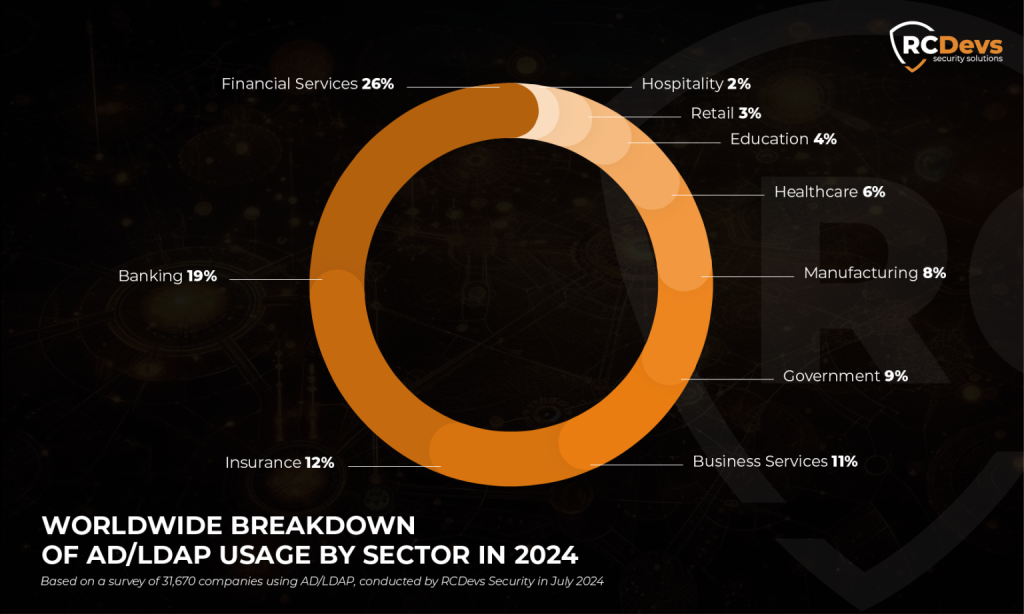
A 2024 study of 31,000 companies worldwide highlights the continued prevalence of AD/LDAP across multiple sectors, confirming its ongoing importance in enterprise identity management.
The Microsoft Cloud Transition Dilemma
Microsoft’s gradual transition toward cloud identity services such as Azure AD (now Microsoft Entra ID) reflects broader industry trends. However, this shift presents significant challenges for organizations that must maintain on-premises AD/LDAP environments.
Declining On-Premises Support
Microsoft’s increasing focus on cloud services may lead to reduced long-term support for traditional AD deployments.
Compatibility Limitations
Many industry-specific applications—particularly in sectors like banking, healthcare, and government—are designed to operate exclusively with traditional AD/LDAP infrastructures and may not support Entra ID.
Concerns Over Forced Migration
Organizations worry about being pressured into cloud migrations that could conflict with regulatory or operational requirements.
Transition Security Risks
Hybrid identity environments created during migration phases can introduce new security vulnerabilities if not properly managed.
Data Sovereignty and Compliance Risks
Migrating identity data to cloud environments may create challenges for compliance with GDPR and other regional data protection regulations.
Increased Operational Costs
Running both on-premises AD and cloud identity platforms simultaneously can significantly increase management complexity and expenses.
Vendor Lock-In Risks
Greater reliance on Microsoft’s cloud ecosystem may reduce flexibility and increase long-term dependency on a single vendor.
Security Challenges in AD/LDAP Environments
Traditional security approaches often struggle to defend AD/LDAP systems against modern cyber threats, including credential theft, phishing, and unauthorized access. Common challenges include:
- Weak Authentication Mechanisms
Many AD/LDAP deployments still rely solely on username and password authentication, which remains vulnerable to compromise. - Limited Centralized Management
Managing access controls across multiple platforms without a unified solution can lead to inefficiencies and errors. - Strict Compliance Requirements
Regulations such as GDPR and NIS2 require robust access control policies and comprehensive audit capabilities. - Insecure Remote Access
Traditional AD/LDAP infrastructures often lack secure remote access mechanisms, increasing exposure to external threats. - Exposure to Brute Force Attacks
Weak password policies and insufficient rate-limiting mechanisms make AD/LDAP systems frequent targets of brute force attempts. - Complex User Lifecycle Management
Onboarding, role changes, and offboarding processes can be inefficient, often resulting in inactive or unauthorized accounts. - Limited Role-Based Access Controls (RBAC)
Without proper RBAC implementation, organizations risk over-privileged user accounts, increasing security risks. - Multiple Directory Management Complexity
Organizations frequently operate multiple AD/LDAP directories, creating fragmented security policies and potential vulnerabilities.
To address these challenges, many enterprises prefer solutions that enhance their existing AD infrastructure rather than replacing it with cloud-only alternatives. This strategy allows them to maintain compatibility with essential systems while improving overall security and regulatory compliance.
Selecting the right security solution therefore requires more than simply meeting baseline requirements—it involves choosing a platform that strengthens AD/LDAP infrastructure while aligning with strict regulatory standards such as GDPR and PSD2.
Why OpenOTP Security Suite Is Well-Suited for AD/LDAP Environments
The OpenOTP Security Suite from RCDevs is a comprehensive Identity and Access Management (IAM) solution designed specifically for AD/LDAP environments. Its native integration eliminates the need for additional layers or complex configurations. As a European-developed solution, OpenOTP also aligns with stringent EU regulatory frameworks, including GDPR and PSD2, making it especially attractive to organizations prioritizing data sovereignty.
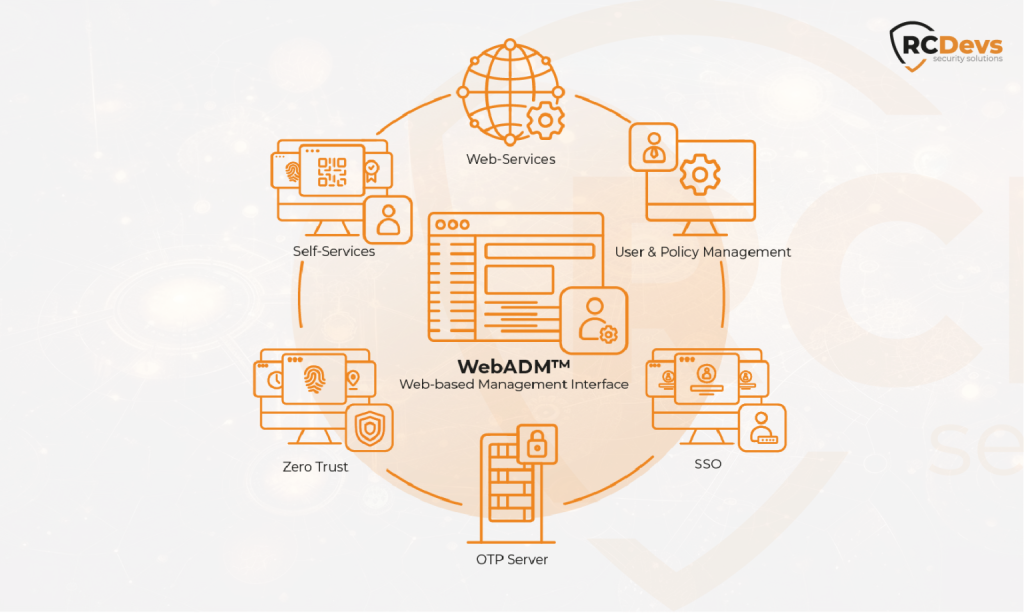
Beyond on-premises support, OpenOTP also integrates with cloud identity providers such as Azure AD, Okta, and others. Through its core component, WebADM, OpenOTP can consolidate multiple directories—including on-premises, cloud, or hybrid environments—into a centralized Identity Provider (IDP) and identity orchestration platform.
How OpenOTP Strengthens AD/LDAP Security
OpenOTP enhances existing AD/LDAP infrastructures through multiple advanced security capabilities.
Multi-Factor Authentication (MFA)
OpenOTP supports various MFA methods, including one-time passwords (OTP), push notifications, FIDO keys, SMS verification, and biometric authentication. By enforcing additional authentication factors, organizations significantly reduce unauthorized access risks. MFA can be applied to Windows logins, VPN connections, and legacy LDAP-based applications without disrupting user workflows.
Single Sign-On (SSO) and Federation
OpenOTP enables seamless access to multiple applications through a single authentication event. Supporting both SAML and OpenID Connect, the platform allows organizations to extend secure, federated access across on-premises and cloud environments. This is particularly valuable for organizations using AD internally while connecting to external SaaS applications.
Identity Governance and Compliance
OpenOTP helps organizations meet regulatory requirements by enforcing strict access policies and maintaining comprehensive audit logs. Features such as digitally signed Contracts of Access and real-time user behavior monitoring strengthen compliance and security. Centralized management of multiple directories also reduces administrative complexity and ensures consistent policy enforcement.
Secure Password Management and Self-Service
Password management remains a common challenge in AD/LDAP environments. OpenOTP’s Secure Password Reset (PwReset) application allows users to reset credentials securely using MFA, reducing downtime and support workload while maintaining strong security standards.
Zero Trust Network Access (ZTNA)
OpenOTP supports Zero Trust security principles by validating every access request based on identity, device posture, and contextual data. Features such as geo-velocity analysis, IP reputation checks, and location anomaly detection help prevent unauthorized access—even from internal networks.
WebADM: The Integration Bridge Between OpenOTP and Active Directory
WebADM serves as the core management interface within the OpenOTP ecosystem and acts as the integration layer between OpenOTP and Active Directory.
Native LDAP Integration
WebADM connects directly to AD/LDAP servers as an identity store, authenticating users without functioning as an intermediary proxy. This ensures seamless data access while preserving existing directory structures.
Real-Time Access Without Synchronization
WebADM queries AD/LDAP data directly, eliminating the need for real-time synchronization. Changes to user accounts, group memberships, or permissions are immediately reflected during authentication and policy enforcement processes.
Attribute Mapping
WebADM leverages existing AD/LDAP attributes to enable MFA and identity management features without requiring schema modifications.
Benefits of the WebADM Integration Approach
- Minimal Operational Disruption
Existing AD structures remain unchanged. - Improved Security
Advanced authentication and protection features enhance AD security without affecting usability. - Centralized Administration
Administrators can manage AD and OpenOTP security controls from a single interface. - Scalability and Flexibility
The solution easily adapts to growing user populations and evolving security requirements. - Regulatory Compliance
Maintaining identity data within existing AD infrastructure simplifies data residency and sovereignty compliance. - Data Sovereignty Assurance
MFA, FIDO credentials, and biometric data remain securely stored within the organization’s AD environment.
This integration strategy allows organizations to protect existing AD investments while significantly improving their security posture.
Conclusion: Why OpenOTP Is a Strong Choice for AD/LDAP Security
OpenOTP Security Suite delivers a powerful combination of advanced security capabilities, seamless integration, and compliance with European data protection regulations. Unlike many competing solutions, OpenOTP is designed with on-premises infrastructure in mind, ensuring identity data remains securely managed within existing AD/LDAP environments.
By supporting passwordless authentication, Zero Trust architecture, and conditional access policies, OpenOTP provides a comprehensive and future-ready identity security solution without requiring full cloud migration. This makes it particularly valuable for organizations in regulated sectors that must maintain strict data sovereignty and privacy standards.
Additionally, OpenOTP’s ability to integrate with cloud directories ensures long-term flexibility for organizations planning to adopt hybrid identity strategies.
About DT Asia
DT Asia began in 2007 with a clear mission to build the market entry for various pioneering IT security solutions from the US, Europe and Israel.
Today, DT Asia is a regional, value-added distributor of cybersecurity solutions providing cutting-edge technologies to key government organisations and top private sector clients including global banks and Fortune 500 companies. We have offices and partners around the Asia Pacific to better understand the markets and deliver localised solutions.
How we help
If you need to know more about Securing AD/LDAP Environments: How OpenOTP Leads the Way, you’re in the right place, we’re here to help! DTA is Quest Software’s distributor, especially in Singapore and Asia, our technicians have deep experience on the product and relevant technologies you can always trust, we provide this product’s turnkey solutions, including consultation, deployment, and maintenance service.
Click here and here and here to know more: https://dtasiagroup.com/rcdevs/