
Cyberattacks are increasing in both scale and complexity, making data protection one of the most critical challenges facing organizations today. While traditional security controls — such as firewalls, antivirus software, and network monitoring — continue to play an essential role, they are no longer enough on their own.
One of the most effective and underutilized safeguards available today is the encrypted storage drive. By converting stored data into a protected, unreadable format, encrypted drives stop unauthorized users from accessing information — even if the physical device is lost or stolen.
SecureData, a global leader in data security, highlights why encrypted external drives are now a fundamental requirement for defending against modern cyber threats.
The True Cost of Ransomware and Data Breaches
The way we work, communicate, and store information has evolved dramatically, and our growing reliance on data has created an attractive target for cybercriminals.
According to forecasts, ransomware is expected to cost victims approximately $275 billion per year by 2031, with a new attack occurring every two seconds as threat actors refine their tactics and malware capabilities. Today’s attacks no longer rely solely on brute force. Instead, they take advantage of:
-
Weak or unpatched endpoints
-
Poorly secured networks
-
Human error
-
Improper handling of data
One of the most underestimated risks is data at rest. When laptops, USB drives, backup devices, or decommissioned servers are lost, stolen, or discarded improperly, attackers often gain direct access without needing to “hack” anything at all. Traditional security tools focus on active threats but offer little protection once someone has physical possession of the device.
Encrypted external drives and flash drives eliminate this vulnerability by ensuring that the data remains protected, even if the device is compromised. In a world where threats are both digital and physical, encryption is not an upgrade — it is a necessity.
How Encrypted Drives Protect Data
Encryption works by converting readable data, known as plaintext, into an unreadable format called ciphertext. Only a verified user with the correct decryption key can restore it to a readable state. Without that key, the information is useless.
Two Primary Types of Drive Encryption
1. Hardware-Based Encryption
Self-encrypting drives (SEDs) contain a built-in processor that automatically encrypts and decrypts data as it is written or accessed. This process happens inside the drive itself, creating minimal or no impact on system performance. These devices typically use AES 256-bit encryption, which is widely recognized as a global security standard.
2. Software-Based Encryption
Software encryption relies on applications installed on the computer or host device. While cost-effective and flexible, it can be more vulnerable to malware attacks and often consumes additional system resources compared to hardware-based solutions.
A major advantage of modern encrypted drives is their ease of use. Once a user is authenticated — through a password, PIN, biometric scan, or security token — the drive works like any ordinary storage device. No additional steps or manual file encryption are needed.
Six Core Ways Encrypted Drives Strengthen Cybersecurity
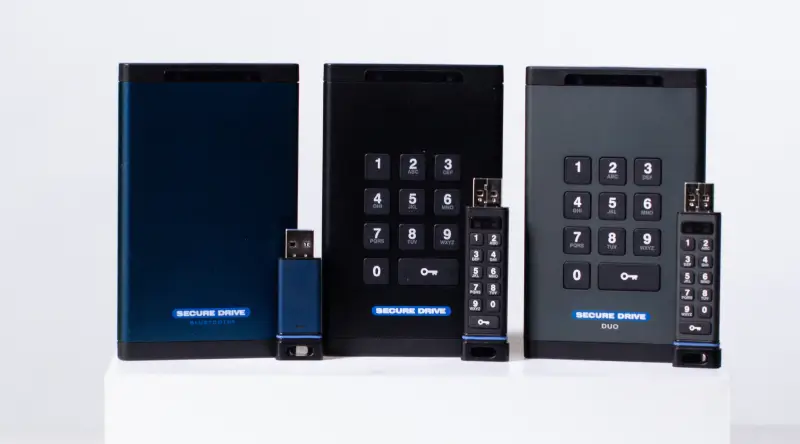
Encrypted drives don’t just add a layer of protection — they provide comprehensive coverage across multiple threat scenarios.
1. Protection in the Event of Loss or Theft
Lost or stolen devices are a leading cause of data breaches. With non-encrypted drives, a thief can simply plug the device into another computer to access its contents. Encrypted drives make the stolen hardware useless because the data is completely inaccessible without the proper credentials. This is especially important for employees who travel or carry portable storage.
2. Defense Against Insider Threats
Cyber risks don’t always originate outside the organization. Employees, contractors, and vendors may intentionally or unintentionally expose sensitive data. Encryption enforces strict access control so that physical access alone is not enough to breach the system.
3. Support for Regulatory Compliance
Many global regulations — including GDPR, HIPAA, and PCI DSS — require strong protection of data at rest. Encrypted drives help organizations meet these standards, and in many cases, a lost device is not required to be reported as a data breach if the encryption meets recognized security requirements.
4. Reduced Impact of Ransomware
While encryption on its own does not prevent ransomware infection, it plays a crucial role in damage control. Encrypted offline backups stored on secure drives are isolated from network-based attacks, allowing companies to restore data without paying a ransom.
5. Protection for Backups and Archives
Backup data is often overlooked or stored in less secure environments. By using encrypted drives for long-term storage, organizations can ensure that sensitive archives remain protected — even if the devices are misplaced or stolen.
6. Increased Business Trust and Credibility
Protecting customer and business data is both a legal and reputational requirement. Using encrypted drives demonstrates a proactive and responsible security posture, helping businesses earn greater trust from clients, partners, and regulators.
Benefits Beyond Just Security
Encrypted drives provide more than just protection — they add operational and strategic value as well.
High Performance with Strong Protection
Modern encrypted drives use hardware-level encryption, ensuring that cryptographic processes happen within the device itself. This removes the performance concerns traditionally associated with encryption. Organizations no longer have to sacrifice speed for security.
Simplified Deployment and Centralized Management
Many encrypted drives now integrate with centralized management platforms. IT teams can easily:
-
Enforce encryption policies
-
Reset credentials
-
Monitor device compliance
-
Manage large-scale deployments
This makes encryption practical even in large enterprise environments.
Seamless Integration with Existing Systems
Encrypted drives can work alongside existing enterprise security frameworks such as:
-
Multi-factor authentication (MFA)
-
Identity and access management (IAM)
-
Endpoint detection and response (EDR)
-
Network monitoring tools
This layered approach significantly strengthens overall defense.
Long-Term Cost Efficiency
Although encrypted drives may have a higher upfront cost, they dramatically reduce the risk of expensive consequences such as:
-
Data breach recovery
-
Legal penalties
-
Regulatory fines
-
Reputational damage
In the broader picture, encrypted drives are an investment in long-term resilience and cost avoidance.
Prepared for Future Threats
As cyber threats continue to evolve — including those targeting remote work, cloud backups, and edge devices — encryption remains one of the most reliable and scalable protections available. Implementing encrypted drives today prepares organizations for tomorrow’s risks.
About DT Asia
DT Asia began in 2007 with a clear mission to build the market entry for various pioneering IT security solutions from the US, Europe and Israel.
Today, DT Asia is a regional, value-added distributor of cybersecurity solutions providing cutting-edge technologies to key government organisations and top private sector clients including global banks and Fortune 500 companies. We have offices and partners around the Asia Pacific to better understand the markets and deliver localised solutions.
How we help
If you need to know more about dynamic data movement, you’re in the right place, we’re here to help! DTA is Secure Data’s distributor, especially in Singapore and Asia, our technicians have deep experience on the product and relevant technologies you can always trust, we provide this product’s turnkey solutions, including consultation, deployment, and maintenance service.
Click here and here and here to know more: https://dtasiagroup.com/securedata/